Getting Over COVID, Getting Over Yourself
How my greatest success as a writer can feel like my greatest failure.
If these ideas are intriguing to you, maybe you wish to subscribe to my newsletter.
Other writing
- "The Sun Rises and Sets With Her, Man" — at The Atlantic
- How Much Should You Spend on a Good Pan? — at Bon Appétit
- To make it through fall, roast your vegetables — at Tone Madison
- How much garlic is too much garlic? — at Tone Madison
- The moral cost of meat — at Tone Madison
This newsletter is now hosted on a new platform. If you feel like you've unsubscribed from it in the past, I apologize—when I imported subscribers from the previous platform, it may have accidentally added people who had unsubscribed in the past.
The Life and Death of a Writer
If someone had told me that The Atlantic would be interested in publishing my thoughts on my favorite movie five years ago, I would have imagined it feeling like I'd finally made it as a cultural critic, a true Professional Writer. I've chased that feeling—and more importantly, that money—ever since I graduated from college 20 years ago. I would have imagined it to be some sort of ecstasy, and an indescribable mixture of joy and contentment, validation and success. Even if I told myself how hollow it would all feel, the past me could never believe it.
The day this piece went live, December 15th, was a doozy. I received that afternoon the final ramp-up dose of my immunotherapy shots to combat my allergies, and later, when I was coughing so hard I almost passed out and spent three hours alternating between sweating and chills, fading in and out of sleep on the couch, I'd realize something wasn't quite right. As reactive as I am to allergens (especially directly injected subcutaneously into my arm), this felt different.
I was coming down with COVID.
For someone on aggressive immunosuppressant drugs to help manage my multiple sclerosis, contracting a virus is a big whoopsie. The body's B cells are what manufacture antibodies, which target new viruses and create a barrier of protection for returning ones. The antibodies are also what target the myelin sheath that protects neurological pathways, including the optic nerve (why I'm blind in my right eye) and the spinal cord (where I have three healed lesions, which make it significantly harder to process information quickly and over extended periods of time). Once a month, I jam a short needle into the top of my thigh, sending some sort of monoclonal antibody juice into my system designed to eradicate all antibody-producing B cells.
You can probably guess that contracting COVID-19 was not in my best interest.
What followed was three grueling weeks of recovering from harsh viral symptoms, ping-ponging between fever, sweats, chills, fatigue, muscle pain, an inability to eat, and a decrease in general mobility. Unfortunately, Paxlovid intensified most of these symptoms. When you have a chronic illness, everything is impossibly hard on your system. Recovery was slow—I tested positive for three straight weeks—but the mental recovery has been slower. Fighting through a sickness that you're pretty sure could have killed you had you not been vaccinated tends to leave some scar tissue—something I'm acutely aware of from the multiple patches of sclerosis dotting my spinal cord. I'm grateful my first neurologist had me get the jab before I started my medication, and I'm grateful for every sequential vaccine over the last five years that helped boost the virus recognition in my non-antibody-producing parts of my immune system.
I've gotten in the habit of using this newsletter to reflect on the past year, a general outlet for thoughts, hopes, regrets, and aspirations. Instead, I spent all of Christmas and New Year's Eve on the couch, in pajamas, wondering if I'll ever be well again. Over two months later, I can confirm that I am, to the degree that I can be considered well.
I don't like talking about being disabled very much because I don't always remember that I'm disabled. Weeks after recovering, I was back to running three miles and throwing 45-pound kettlebells around—something you typically don't see in people who have MS. I'm extremely fortunate that my limitations aren't physical, and aside from that whole "being blind in one eye" thing, I get through the world fairly easily. But I am disabled. My neurologist described scar tissue on my spinal cord as "a sort of speed bump." The electrical signals that shoot through my nervous system, telling my limbs to move and my brain to process, have to work ten times harder to make it to their final destination. I'm more likely to get tired from a day of email work than I am from physical exertion. I'm like a dog with a puzzle box that way: thinking makes me exhausted.
That exhaustion also breeds anxiety and depression. Hitting a fatigue wall keeps me from doing the things I want and need to do. It's easy to get anxious about managing your healthy time between work and play, and that anxiety makes it easy to slip into depressive periods. For example, I haven't been able to take vacation time in the last few years because all my PTO has been used for various ailments. It's all a balance, though, and the fact that I'm writing this right now is a good sign that I'm swinging out again.
That also means it's time to reckon with something else: my life and legacy as a writer.
Which is a stupid thing to say. Or care about.
But I don't think you could name a single writer who's only in it for the love of the game. The point of writing is to get others to read your words, and there's no way to process that without recognizing a vainglorious streak in your own psyche. That is to say: I was generally happier on a day-to-day basis when I wasn't writing. How can you feel the emptiness of failure if you don't even try?
The highs of writing, however, are very high. To call myself a failure is downright stupid. I'm centering this piece around being published in a high-profile magazine about a topic I'm passionate about that earned me the most money I've ever made for cultural writing ($700, which I donated to individual families struggling to survive during the height of ICE's occupation in Minneapolis last month because The Atlantic routinely publishes god awful people saying god awful things and the direct deposit felt like blood money in my bank account).
What I'm describing is, to any self-reflective addict out there, addict behavior. Writer AJ Delaurio described it on this episode of the podcast Search Engine: all of the drinking and drugs that he did were in concert with his will that the next piece he had published would be the one that truly made everything feel alright. Instead, every piece that went up generated the same exact feeling: nothing. A general void where elation should live. I'm lucky that I don't have issues with drinking or drugs, but that doesn't mean I don't live through addiction. My father got sober a few months before I was born and still works the program to this day. Writing is, unfortunately for me, the high that I'm constantly chasing.
Which is a problem. Writing helps me feel creatively fulfilled and contributes to my overall humanity. The process of writing grounds me, pulls me into the physical world where I can experience the warmth of the sun on my face, the sweetness of well-brewed coffee on my tongue, the soft sensation of my dog's fur under my fingertips when I ruffle his floppy ears.
Hearing Delaurio describe his sobriety changing his relationship with writing and publishing was revelatory, but I heard him describe that process well over a year ago. Changing my own relationship with writing and publishing, well, that's going to be a process. Don't worry, I have a therapist.
This is a long way of saying: "This is why I didn't send a newsletter for three months."
I had planned a big December round-up, including the above-linked pan piece for Bon Appétit that I'm proud of, but when COVID knocked me on my ass, I fell into wallowing. Wallowing doesn't feel good, but it feels not good in the right way. There's nothing a writer loves more than an internal woe-is-me mindset that transfers the blame of your bad mood onto external forces beyond your control. After all, why not? Why shouldn't I keep it? It's mine, my own, my precious depression.
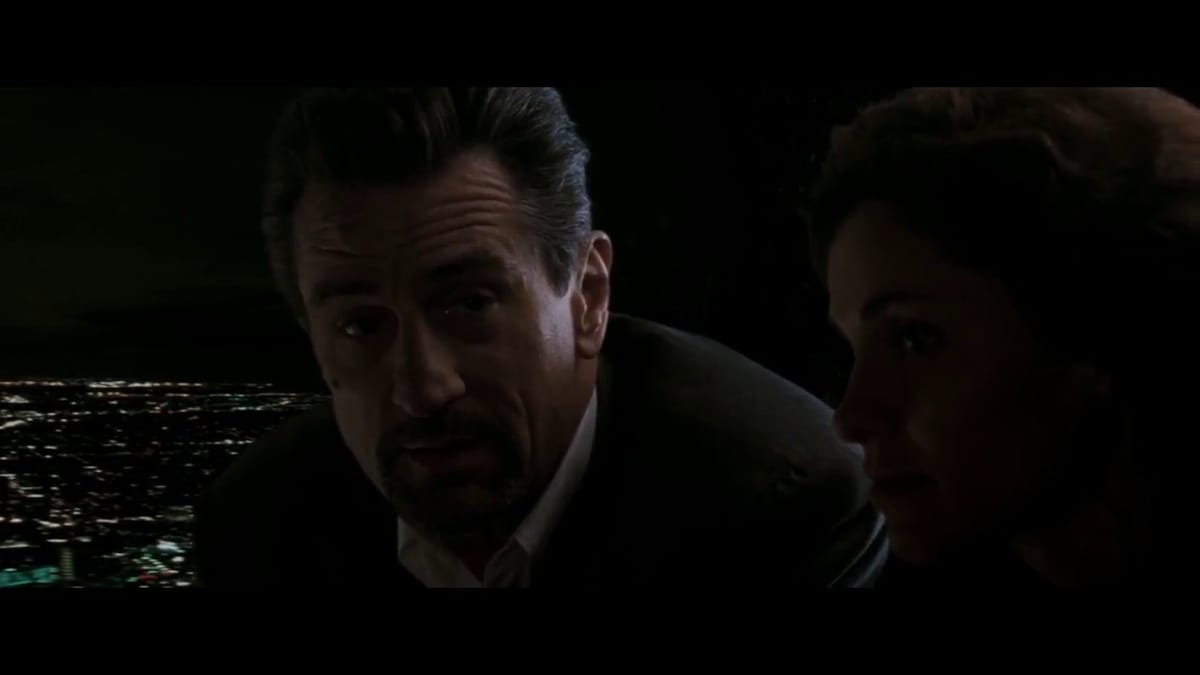
But I don't want to rest on stolen valor. To misquote Neil McCauley in Heat: I am depressed, I do not have depression. What I have is a disability that affects my productivity, constantly bumping into the Protestant work ethic I was raised to worship. Namely, at times it's hard to think, hard to write, hard to process why it's hard to think and write.
And then again, that's why I'm (for the umpteenth time) reworking this newsletter. If writing feels good for me and preoccupation with publishing feels bad, I need to center myself on writing. Nothing helps you focus on writing and not reception better than a free newsletter with a small audience.
So please, read my latest work from December, and tell your friends to subscribe to this thing. Just don't tell too many, I suppose, so I can avoid the trappings of tying my mental health to this platform.
I kid, of course. Nothing would make me happier than 1,000 new subscribers. Except for 2,000 new subscribers. Better make that 3,000. I'm sure, at some point, the number of subscribers will feel satisfying. I just need to get to that next tier to verify.
Read
Smart and insightful food writing stealing the lapsed name of a legacy publication. Two pieces a week, one always being a recipe. Worker-owned, worth your money.
Watch
I like to describe this show as Game of Thrones getting its own version of Dumb Andor. The original series captured how brutish, nasty, and short the olden times were (even if they're fantasy olden times), and this show captures that even better with a more focused story and less oppressive lore.
Listen
- Love Is Not Enough by Converge
At this point, Converge are the patron saints of everything loud and heavy, between Kurt Ballou's production for everyone and Jacob Bannon's Deathwish, Inc. record label. Their latest album is ten tracks in 30 minutes, and somehow it feels so much more expansive and punishing than something that short can physically be.
Consume
I don't love to admit it, but these things are good. I don't care about functional adaptogens; I just like small cans of minimally sweet drinks with complex flavors that don't shy away from salinity and bitterness. They're pricey, but ordering a subscription in bulk helps.
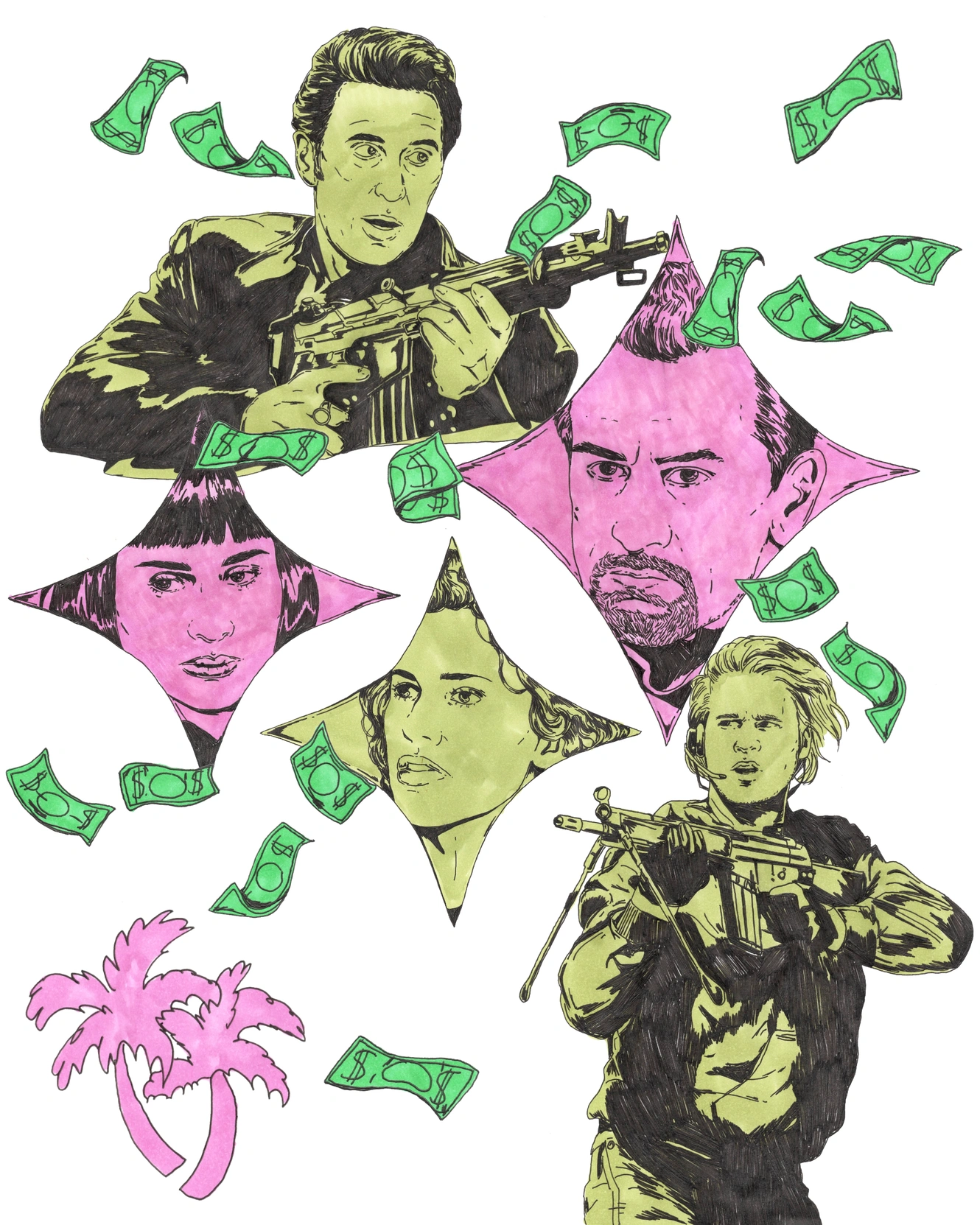
Artwork by Ashley Elander Strandquist. You can view her illustration work here.