Working for the Knife
Examining creativity through the lens of Mitski and taking what you need while leaving the rest.
If these ideas are intriguing to you, maybe you wish to subscribe to my newsletter.
Other writing
- Most People Don’t Have a Petty Knife—They Should at Bon Appétit
- How I make bread at Tone Madison
No good guys
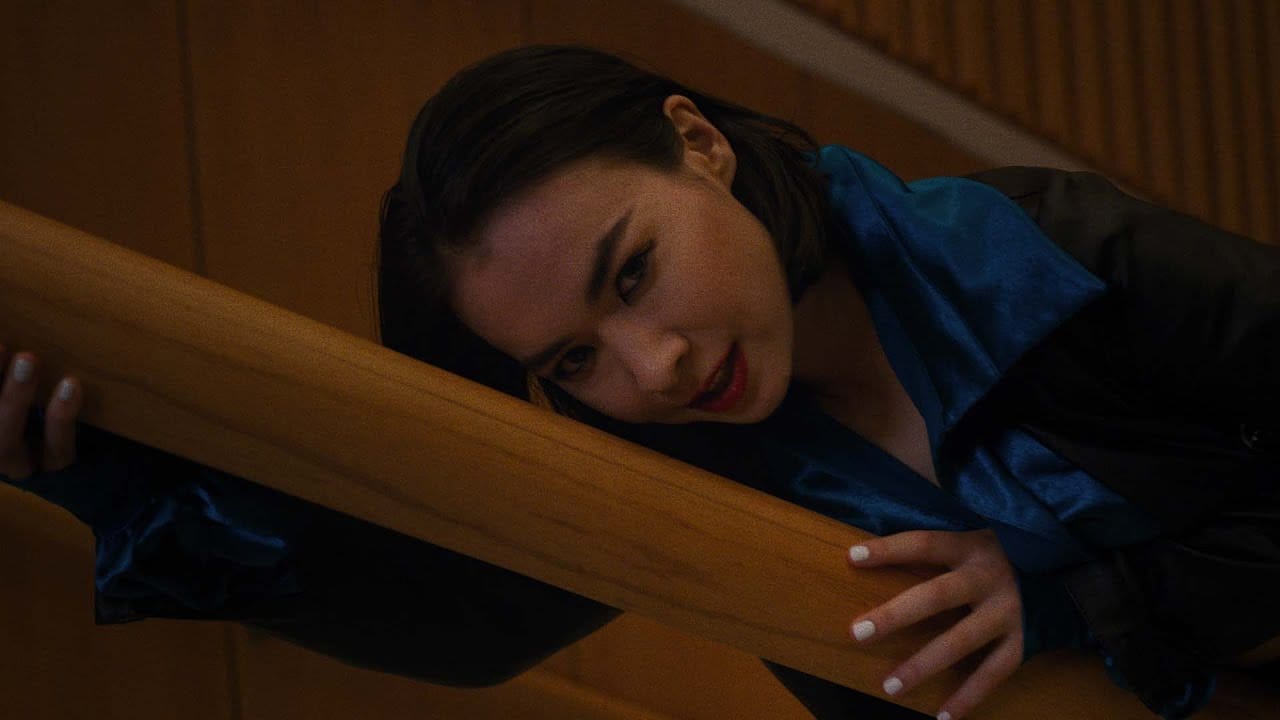
When Mitski sang the opening lines to "Working for the Knife," the lead single from her 2022 album Laurel Hell, they were the first words her fans heard released under her name since she announced a hiatus on stage in 2019:
I cry at the start of every movie
I guess 'cause I wish I was making things too
The stanza is relatable to anyone curious about creative work: the moment you start making things, everyone else's successes begin to look like your failures. The rest of the song is confessional in tone, much like most of Mitski's work, unwinding into a mess about unmet expectations and the stories we tell ourselves about them. Like most of the songs on her 2018 masterpiece, Be The Cowboy, "Working for the Knife" pairs lines like, "I used to think I would tell stories," with the punchline twist of, "But nobody cared for the stories I had about no good guys." The simplicity of her lyrics gives way to the complexity of meaning in context.
It's also the first time Mitksi's confessional tone directly addresses what her audience experienced firsthand. As a relatively private person, Mitksi's songs about love and loss exist in a version of the abstract. Her fans never saw who it was that was making her miserable/that she made miserable. They did see her, however, tell them she was going away for awhile.
In my life, "Working for the Knife" became a daily anthem. Stuck in my own creative rut, its jangly backbeat with its syncopated cowbell became a rallying cry to reexamine my relationship to the written word. Just listening to the song on a morning walk, while the dog tugged on his leash and the sun crested over the lake, was a short form of therapy. By speaking it into the world, Mitski's creative envy became my creative envy. And acknowledging that it existed was key to breaking free of it. At least in long enough spurts to get some writing done.
It was also a lightning rod that I could attach myself to. After spending four years obsessed with the density of Be The Cowboy, I felt underwhelmed by most of Laurel Hell's tracks. Mitski's earlier work is marked by a simplicity in its music, a soft version of 90s alternative rock that lets her deadpan lyrics with a singular focus that spoke to many heartbroken listeners looking for a mirror reflection of their own emotional state. Be the Cowboy, however, swirls and dashes, jumping ship on a song structure midway through its short runtime to punctuate an abstract line that evokes analysis in the person hearing it. In short, Be the Cowboy is a triumph in modern songwriting in a way that's almost unfathomable.
On "Old Friend," Mitksi starts with a simple palm-muted acoustic guitar before the piano kicks in and the listener is lurched into an odd time for its chorus, where two bars of 3/4 time are shifted into a 2/4 capper that leads you back to the verse. Just under two mintues, "Old Friend" also goes out of its way to establish a soaring synth melody that alternates with Mitksi's own voice to anchor the song while she sings, "Every time I drive through the city where you're from, I squeeze a little."
In contrast, "In a Lake," the intro to her 2026 release Nothing's About to Happen to Me, Mitksi lulls through a simple Americana waltz replete with banjos and fiddle before it pops into an orchestral overture punctuated by the noise of a big city behind her airy vocals. Her lyrics center a simple observation: in a small town, you're defined by what people know of you. "In a big city, you can start over."
Her two approaches in these songs that reference a city are contrasted. In "In a Lake," the big city is an abstract object in the distance, where you can start over. In "Old Friend," the city she drives through brings up old and painful memories. The line "I squeeze a little," is unfinished and figurative. We don't know exactly what she's squeezing, but we can feel it ourselves by recalling our own similar experiences. We're squeezing a little all the time when we land in discomfort.
As I try to work through Nothing's About to Happen to Me without feeling a spark, I'm reminded that she released another album, this time in 2023, that left me wanting. The Land Is Inhospitable and So Are We came and went through my ears, barely registering in my brain, which was still turning over lyrics from Be the Cowboy years later. "I fell in love with a war, and nobody told me it ended," she sings on "A Pearl" as the full band kicks in with big heavy guitars that shift between half time before the whole thing kicks off into a huge spatial landscape with screaming guitars and blown out synth bass covering everything. When the horns kick in, they're blowing the holy trumpet of Gabriel as the clouds part and the dead return to life.
It's difficult to become so blatantly attached to one piece of art from an artist while feeling nothing about the rest of what they produce. To me, the Pixies made a few catchy but forgettable tunes and then crafted the unimpeachably perfect Bossanova, which strings together an odd progression of songs that swell and swallow themselves as they push forward in a never-ending slog of post-punk depression. Try as I might, I don't think I'll ever convince another person that the only Pixes worth listening to is their album recorded while on the verge of collapse when their frontman completely took over, dictating every single note that every member played. Coincidentally, I'm also a huge fan of Tusk.
There's a power to Be the Cowboy that's unmatched in the rest of Mitski's work. The album comes at you with the full bombast of a nü-metal ballad in "Geyser" before eventually making its way to the jaunty piano pop of "Me and My Husband," building a world in one song that Ben Folds and Ben Kweller never were able to quite crack. The album's energy is bold and frenetic; it refuses to let you define what you're going to hear next.
It's hard to say I'm a Mitski fan. Be the Cowboy is one of my top five favorite albums of all time, and yet I shrug through everything else she's recorded. She's making music that people connect with, even if I'm not one of them. Maybe her work just isn't for me. "I always knew the world moves on, I just didn't know it would go without me," she sings on "Working for the Knife."
"I'm working for the knife" acts as a mild refrain, anchoring each stanza until it pivots to "living for the knife" and ultimately "dying for the knife." Like many of her lyrics on Be the Cowboy, Mitksi doesn't define what "the knife" is, but she also doesn't need to. To name a demon is to hold power over it. But letting her demon go unnamed, Mitksi acknowledges the power it holds over her.
It's a reminder that, in general, we are powerless against art. My brother tells a story about how he walked into a gallery and saw a Rothko "Red" painting and immediately burst into tears. I don't have control over how Be the Cowboy ingrained itself in my being, and I also have zero control over my apathy toward the rest of everything. One thing I do know about seeing Mitski release new work is the pressure to put out my own work. Excuses abound, struggles aplenty. Shiny new album art in my music feed, just asking for a listen.
I guess I wish I was making things, too.
Read
- Spook Country by William Gibson
The second book in Gibson's 9/11 trilogy explores a world where the bad guys are anonymous government operatives who are ICE, or acting as ICE, or are part of DHS, or some other nebulous alphabet agency birthed by the Patriot Act. The protagonist's father is addicted to the outrage he feels from watching non-stop news feeds online. As a novel, Spook Country is a little sloppy and follows the Gibson template too closely: the protagonist knows nothing, is given money and information by a rich benefactor, witnesses something, but ultimately doesn't change the world. As a piece of commentary that perfectly predicted 2026, well, that's Gibson's specialty, isn't it?
Watch
HBO's adaptation of a series of George R.R. Martin novellas set in Westeros delivers on the pieces that people want: dumb jokes, excellent costuming, brutish morés, swords, strong dialogue, and terrifying yet thrilling melee combat. The simplicity of the story anchors it better than Game of Thrones, which was saddled with a drive to build the entire novelized world on screen. The issue there is one of format: writers develop and improve over time, each novel encapsulating the writer's imagination and ability as it's published. TV series trying to adapt a book series will struggle to sort out tone, story, detail, etc. A brief adaptation (30-minute episodes) of an already brief book ensures that time progresses naturally and the right details land when they need to. Truly a delightful bit of television.
Listen
- Bossanova by Pixies
Odd, churning, level steady, and driving towards something, Bossanova is a true accomplishment in stringing together an entire album. What that is, who can say. Just listen to it start to finish.
Consume
Black tea is simple to prepare—boiling water, loose leaves in a simple tea pot, let it steep. But most black teas are brutish in flavor profile: heavy on tannins, bitter, and designed for milk and sugar. A slightly elevated black tea, like the one linked out to Rishi, offers complexity, sweetness, balance, and unique flavor profiles. I brew tea almost every afternoon, and after years of high mountain oolongs, shinchas, and silver needles, I find that the effort-to-payoff ratio of a nicer black tea hits the sweet spot. Weigh your tea (about 4-5 grams for 280mL [10oz], 6-7 grams for 350mL [12oz]), pour just off the boil, and set a timer for 3 -4 minutes. But just like wine and coffee, it can be tricky to find the quality you want on any random grocery shelf. Stick to big-name specialty tea brands, like Smith Teamaker or Rishi Tea, for ease, quality, and price.
Artwork by Ashley Elander Strandquist. You can view her illustration work here.