The Inside Out Nature of Widow's Bay

If these ideas are intriguing to you, maybe you wish to subscribe to my newsletter.
Other writing
- "The Sun Rises and Sets With Her, Man" at The Atlantic
- No One Gets A Holiday From Death at Bright Wall/Dark Room
The duality of man
My neighbor's smoke detector is chirping in odd intervals, something I can hear only because I'm sitting outside on the brick patio behind our house. If I imagine it to be a bird piping up at odd intervals, I can tolerate it just fine. After all, I'm outside, where the birds are. But when faced with a chirping smoke alarm—chirp—while sitting indoors and—chirp—trying to—chirp—manage my indoor life, I would be tearing through drawers looking for the last stray nine-volt, convinced—chirp—that just one more chirp might make my head explode.
My indoor life and outdoor life are comically at odds with each other. Indoors, everything is tasked to death, a never-ending string of trying to restore the state of the house to a version of neutral (clean, organized) that is defiant of the basic physics of modern life. Outdoors, I sweat freely, letting the sun bake the top of my head through slits in my helmet while I pedal my inexpensive bike to a café. Outdoors, I sip coffee and read peacefully. Indoors, I fret about the state of the various soaps and detergents scattered under the kitchen sink, and whether one might be leaking noxious blue liquid all over the cabinet floor.
It's just vacationing, mind you. The outdoor mindset is bolstered by regular bursts of showering throughout the day, combined with interludes of YouTube clips auto-playing on the TV while I lie prone on the couch. It's a luxury to sit and write in the backyard, one thoroughly patronized by the work put into making the indoors tidy enough to relax. It's important to remember, however, that these two contrasting sides of myself don't exist in a vacuum. If I spend too much time enjoying the weather with a book, I'll start to remember last night's dishes resting in the sink, waiting to be scrubbed. That inner conflict is also what makes Widow's Bay so uniquely crafted.
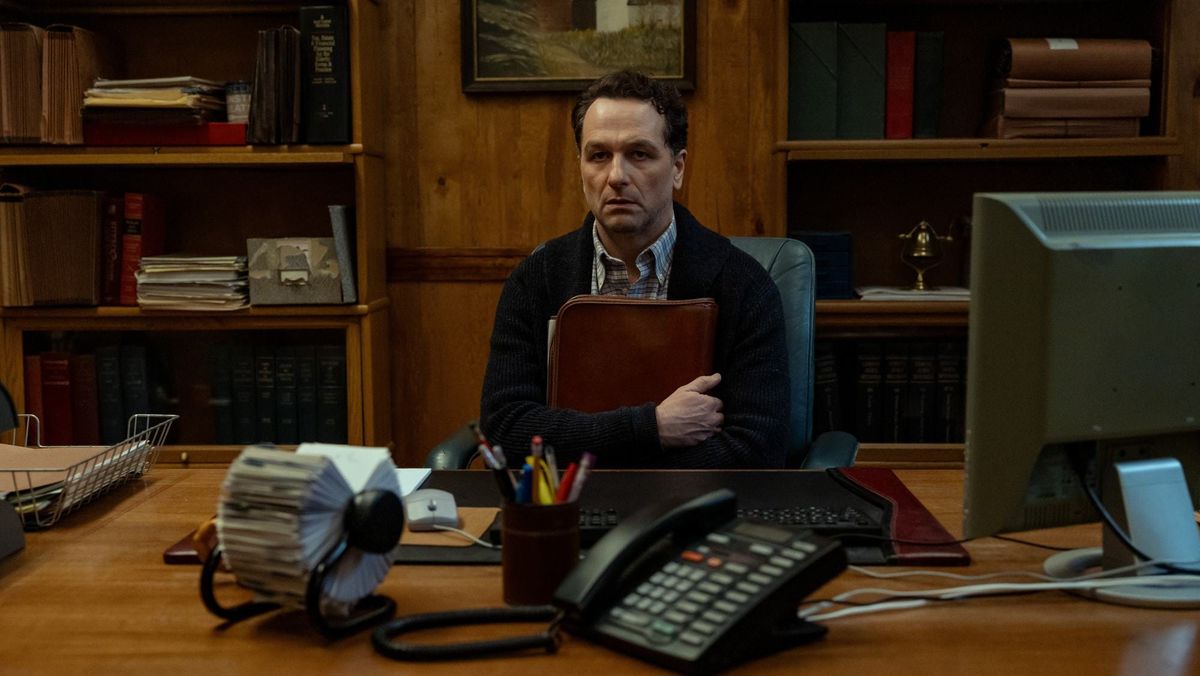
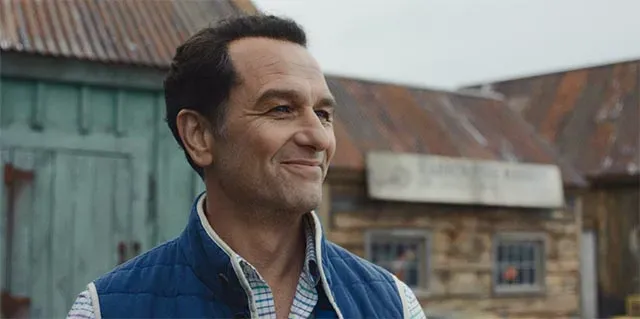
In Widow's Bay, Tom Loftis (Matthew Rhys) is the island town's combative mayor—he's originally from the mainland, ran unopposed, and bristles at the quirky residents and their slightly-off behaviorial tics. Tom wants to turn the island of Widow's Bay into the next Martha's Vineyard, but his constituents are generally uninterested in his dreams of economic development. Despite the contrast between his practical mindset and the kooky townsfolk, Tom is not the sole human man in a muppet world, no matter how much it feels like that might be the driver of the show's tension. The main tension of the show is that the island is cursed.
As each new terrifying haunt appears in a monster-of-the-week format, Widow's Bay strikes out to balance the fine line between horror and comedy. Mayor Loftis wants an influx of tourists to transform the island into a vacation hotspot, but he also needs to contend with the life-threatening manifestations of the island's dark past. The stakes of the conflict are lopsided, at best, and nonexistent from a practical standpoint. But while the average comedy would tug on those contrasting points of view for the entire season, railroading plausible deniability into a more delusional mindset for the protagonist, Widow's Bay does not.
Comedy resists change. The sitcom thrives on establishing a baseline, pushing the edges, and returning to first position with every new episode. That's the "situational" part of the comedy. One must imagine the characters of Seinfeld in a Sisyphean version of Groundhog Day. Most version of Widow's Bay would anchor their jokes in Tom finding new excuses every week to brush off the existential threat so he can continue his Amity Island Mayor Mentality: "As you can see, there is a beautiful day, the beaches are open, and people are having a wonderful time." But by the end of the first episode, Tom has a terrible feeling that local crank Wyck (Stephen Root) is onto something. Subsequent encounters with a haunted inn and a hitchhiking ghost thoroughly convince Tom that something is horribly, horribly wrong by the end of episode three. Comedy arc be damned.
That isn't to say that Widow's Bay isn't funny—it is. It is currently the funniest show on television. Its humor, however, isn't situational. The push and pull of Tom wanting to protect the island's residents while maintaining a healthy tourism industry isn't played for laughs. Instead, its punchlines are ventilation holes for the dramatic tension built by truly stressful horror moments. Both horror and comedy need that cycle of tension and release to trigger a response in the audience, but Widow's Bay swaps genres in a way I've never seen before.
Most modern horror movies trigger a jump scare as a sort of fake-out to audiences—the hero is climbing the stairs slowly, the monster is on the other side of the door. Before the knob turns, whammo: a cat pounces in the darkness. The release of that tension is relief for the audience, a perfect way to lull them back into security just before the monster bursts into frame unexpectedly. Comedy follows a similar formula: the setup builds tension before the punchline triggers release. What Widow's Bay does so well is insert a comedy punchline at the top of the stairs. In a flashback episode to the 1800s, we learn that the island's curse is localized to its leader. When his new wife conspires with townsfolk to have him murdered, an anonymous assassin sneaks into their bedroom at night. He approaches the bed slowly, knife aloft, ready to strike at the shape beneath the blankets. Then the camera pans: his wife stares up at the lens, angrily pointing to the other shape beneath the quilt in a moment of pure slapstick.
That is to say: when a cat jumps out of the shadows, it is a joke on you, the audience member. When Widow's Bay swaps in a punchline during dramatic tension, it is a joke on the characters. The show is laughing with you, not at you. The fact that this tactic is used sparingly also keeps audiences on their toes: you never know if you're about to be hit with a joke or a sea hag. Widow's Bay may only have one or two jokes per episode, but every one so far has triggered an uncontrollable guffaw from me, even when jogging on the treadmill.
Removing sitcom conventions also lets Tom's conflict have real, definable stakes. Much as my indoor and outdoor selves are inextricably intertwined inside my higher being, Tom's character arc holds true tension between his conflicting viewpoints. If the island's curse is truly breakable, they'll need the vacation money to survive. But in order to get to that point, they'll need to literally survive. He's never truly able to lean one way or the other, and because his situation isn't played for comedy, the show's dramatic arc is engaging and compelling.
It's unsurprising that many are calling Widow's Bay the best show on TV right now, and I'd have to agree. It's incredibly well-crafted. It also doesn't hurt that each episode is a fun, self-contained romp—perfectly digestible in the summer in those moments when you cycle back indoors during the heat of the high sun in the late afternoon. Just don't look over at the dishes in the sink while watching, otherwise you might need to do a little vacationing outdoors. In fact, I heard of this great new spot that just might be the new Martha's Vineyard. Have you heard of Widow's Bay?
Read
- Minor Black Figures by Brandon Taylor
I appreciate Brandon Taylor as the bard of modern millennial ennui—sort of a stateside Sally Rooney. I love the way he works in short prose, letting stark detail and format games drive deeply personal and powerful moments. I struggle a bit with Minor Black Figures, which focuses on a longer single narrative rather than shorter vignettes woven together. Some passages feel oddly inserted to pad length, some interactions include a distracting amount of detail. Main characters will stop off for ice cream without a single mention of the storefront, but when the hero needs coffee, the café is fully named, the merchandise on the shelf includes real-life brands, and the café owner has a full backstory that feels jarringly out of place. Still, I love the big ideas his characters wrestle with, and how thoroughly modern his stories are. I don't mind hyper-detailed narratives, I just wish this novel balanced itself with more consistency. Still, I'm hooked.
Watch
Movie Club is firmly in 1977, and just the other week we landed on the release of Star Wars. But instead of watching the hyper-polished Special Edition on Disney+, we opted for one of the digitized original print versions. Hard to say which one we landed on, but it was stabilized and cleaned up, one of the hi-res scans. Watching the movie in its original form, through a not-quite-perfectly polished version, made me appreciate even more where this thing comes from. In isolation, Star Wars is truly a miracle of editing, pacing, and adventure. It's easy to go back as a Star Wars fan and feel like the original movie is a bit cheap or goofy, but since its inspiration is cheaply made serials, it feels more like a loving tribute to a form of media we no longer encounter. You can find even rougher versions of beat-up prints recovered from old grindhouse movie theaters, and I think it's really fun to watch this movie in those formats.
Listen
I'm a sucker for mid-tempo, punishing, heavy songs, and the way that Harm's Way turned "Terrorizer" into a sort of post-industrial slugfest is fascinating. One of the truly great modern heavy basslines.
Consume
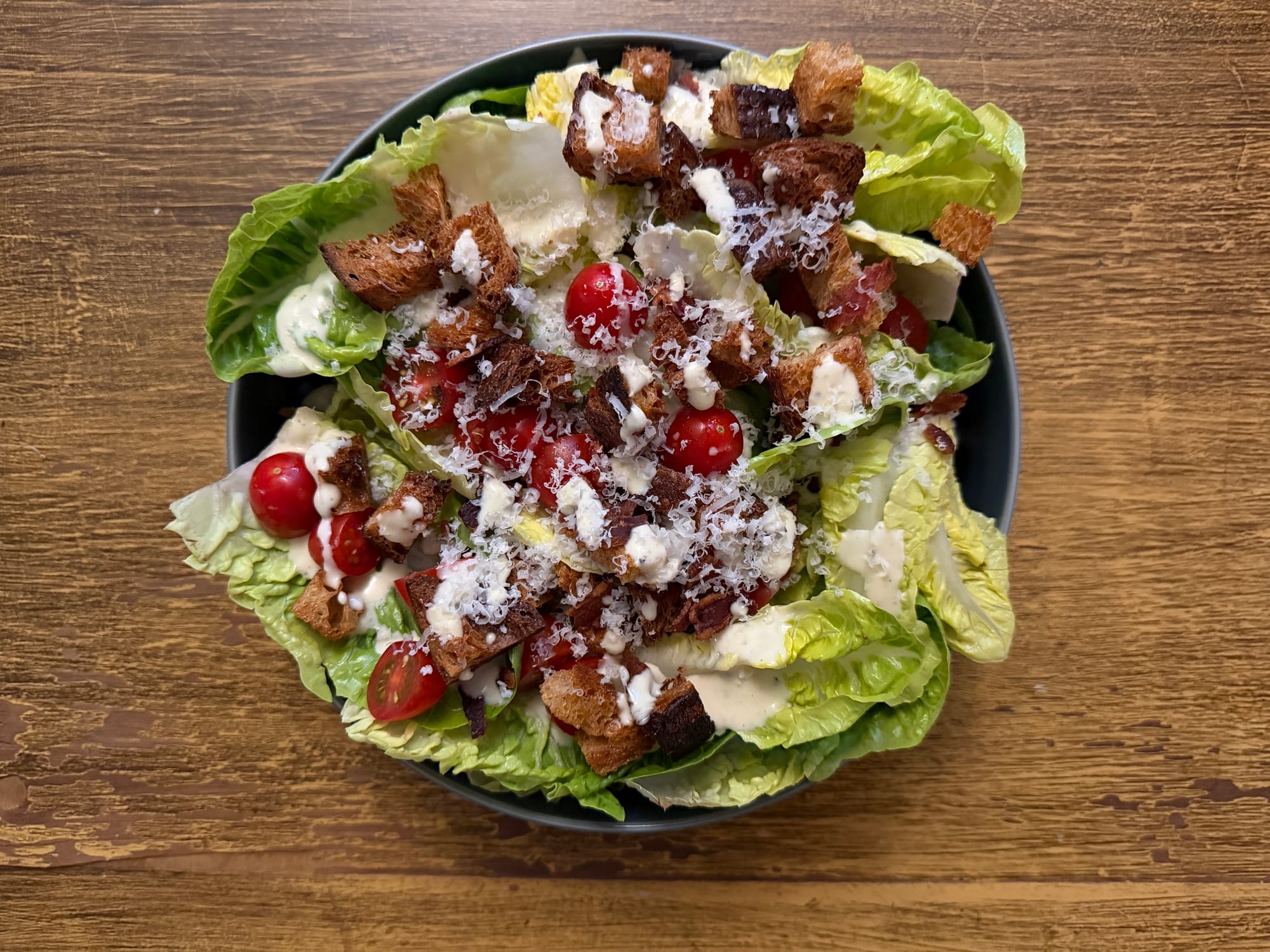
- BLT Salad
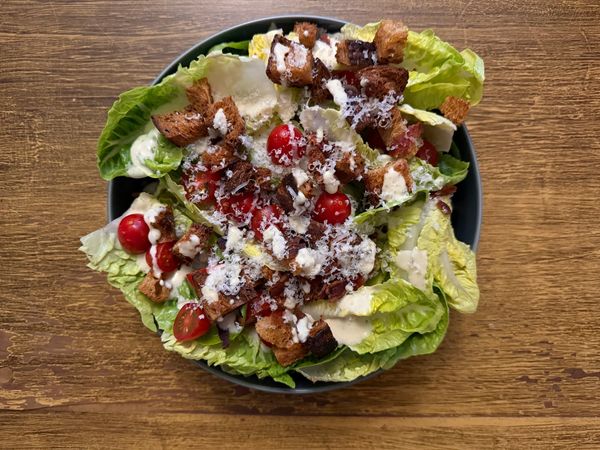
Seems obvious, right? But truly, this was one of the best things I've ever eaten. Built around Little Gems lettuce, sourdough croutons roasted in bacon fat, bacon, and a simple mayonnaise-based dressing with cherry tomatoes and a shaving of Parmigiano-Reggiano, this BLT Salad truly knocked my socks off with flavor and texture. The key is in layering everything the right way to create new and distinct flavors and textures with each bite. Recipe for this coming sometime next week.
Artwork by Ashley Elander Strandquist. You can view her illustration work here.