The Vibes-Only Cinema of Disclosure Day
Breaking down the rocky foundations of Disclosure Day's jumbled screenplay, and why it ultimately doesn't matter for a movie like this. (

If these ideas are intriguing to you, maybe you wish to subscribe to my newsletter.
Other writing
- I Asked Coffee Experts How to Keep Beans Fresh—They All Said the Same Thing at Serious Eats
- Mini Whisks Are Truly Great for Sauces, Vinaigrettes, Eggs, and More at Serious Eats
This newsletter WILL thoroughly discuss the plot of Disclosure Day, so if you haven't seen it, you might want to skip this one until you have.
Don't try to understand it. Feel it.
Steven Spielberg makes egg-shaped movies. Let me explain. At least, I think I can explain. The type of blockbuster movies that Spielberg invented stake their foundation on the Full Circle moment. It's the hero's journey through pop art. You start somewhere and end up back where you started, only changed. But Spielberg doesn't draw circles. His movies are oblong, heavier in the middle, where they wrap around themselves and careen into a singular shape: The Egg. The climax isn't probably what you expected it to be, and yet it all makes sense if you stretch your priors enough to fit what he's trying to do.
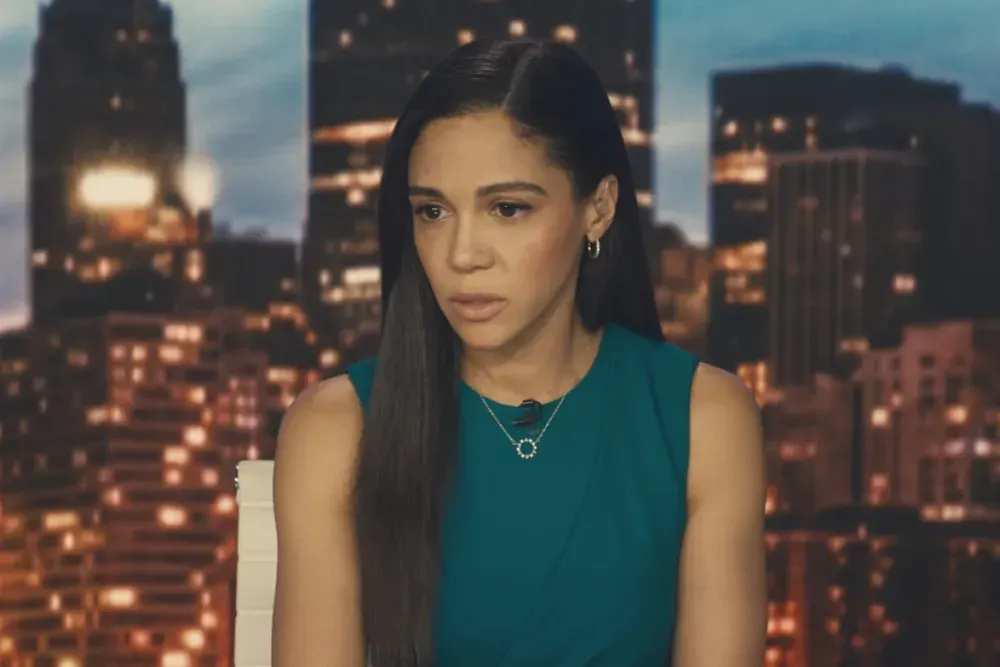
When Jane (Even Hewson) finally shows up in the final act with The Device, audiences aren't waiting for her to deliver the final MacGuffin. By the time we get to the TV studio in Kansas City, the plot has gone egg-shaped, and Jane has essentially been shut out of the film and our short-term memory. It's the pinnacle moment of a Spielberg movie, and the best indicator of whether you're ready to buy what he's selling. You can have two reactions to that moment: oh thank god she saved the day, or what the hell. The what the hells are, understandably, groaning at the deus ex girlfriend nature of her parachuting in with perfect timing. The oh thank gods, however, have been waiting for this moment of movie magic to kick them in their gut.
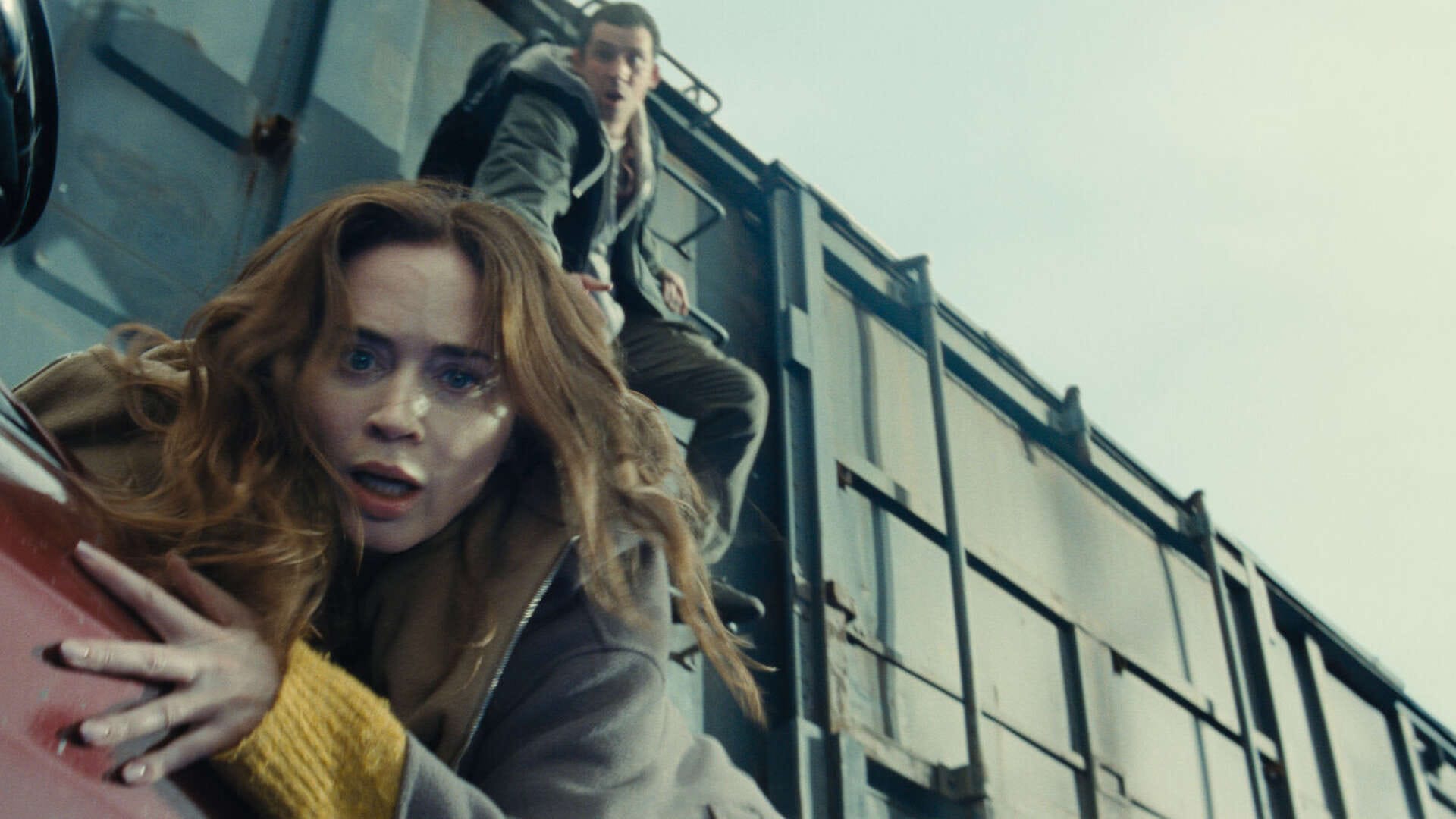
That is to say: Disclosure Day requires immediate buy-in from the viewer. If you find yourself wondering why a local affiliate weather person lives in a massive renovated loft and drives an Alfa Romeo, the movie will not work for you. If you're confused why Jane and Daniel (Josh O'Connor) are each other's one true love without ever having, say, had a fifteen-minute conversation before, this movie will not work for you. If you're concerned that Margaret (Emily Blunt) seemingly has undefined superpowers that perfectly fit any moment, this movie will not work for you. If you go in Tenet style, however, there's a lot that Disclosure Day offers.
Don't try to understand it. Feel it.
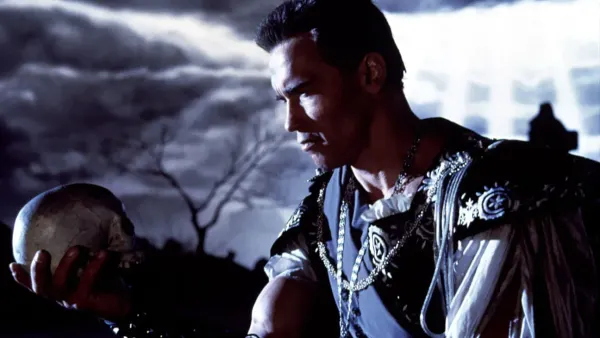
Aside from the firetruck parallel and the role of Santiago (Tommy Martinez) mirroring Robert Pattinson's Neil in Tenet at times, what truly pulls both movies together is a smear of vaseline over the plot details, driving the viewer to focus on a point of emotional catharsis. For Tenet, Christopher Nolan wanted audiences to consider the weight of what they'd be willing to sacrifice to save the world. In Disclosure Day, Spielberg wonders whether processing personal trauma can bring universal empathy worldwide. Both movies need you to jump on and go with the flow. Don't worry about why The Device is now an invisibility cloak. It just is.
The things that work in Disclosure Day are true feats of incredible directing. The action sequences are impeccable. The pacing is engaging. The performances are strong. But everything is a bet on whether the final few minutes will move you in the same way as the extras staring at their phones at a bus stop are moved. The plot may have holes; the screenplay doesn't. Screenwriter David Koepp is a technician, but you have to accept every single line of dialogue as doctrine for anything to come together. That is to say, most of the plot hang-ups have a quippy one-liner that pushes the viewer through if you want to live in the world Spielberg built. Daniel's math superpowers isolated him from other humans, and he struggled to make connections. Until he met Jane. Which isn't shown or explained; it's just a single line Margaret utters. Who has super empathy powers. Meaning she knows why Daniel was able to connect to Jane and not anyone else, even if the audience never gets a reason. It's a point of endless frustration if you zoom in; it's a quick story beat you can move past if you zoom out.
If you do buy into Disclosure Day, you're given the framework for some pretty big questions without a definitive answer. As much as Spielberg seems to suggest that learning about extraterrestrial life can bring us all together, Disclosure Day suggests that the mass media event itself holds the magic we're looking for. It's a quick parallel to audiences in theaters reveling in the revelers—if you felt the power of everyone coming together in that moment, you don't need aliens to be real to feel it. You just need a movie about aliens being real.
Looking at Spielberg post-Fabelmans, it's interesting to apply a "the power of cinema" lens to his work. There's a scene in that movie where Sammy Fabelman (Gabrielle LaBelle, the Spielberg stand-in) is confronted by his bully after making his bully the star of the movie. The bully is upset—he feels like he can never live up to the idealized version of himself he saw on screen. When he asks Sammy why he shot him that way, one of Sammy's answers was "I don't know."
That's the lodestone of Spielberg's entire catalog. Through this scene, he gives us a way to view all his movies: they're the work of a preternaturally talented wunderkind who doesn't quite know why he's making what he's making. But the Fabelmans also suggests that making movies is the way that Spielberg processes his own trauma. If anything, Disclosure Day is a movie about making The Fabelmans: as someone who experienced tremendous personal growth by processing his childhood through a mass-media event, why wouldn't he wish the same for everyone?
Then again, many of Spielberg's missteps stem from his inability to control himself, much like young Sammy. If you know you can perfectly frame a teenage gymnast kicking a velociraptor through a window off of makeshift parallel bars, why wouldn't you shoot it? These moments echo throughout most of his later movies—the gas burner humourously flicking on during the tense Minority Report chase scene, the perfect slapstick of James Spader being shot in the streets in Lincoln, and, yes, the running-over-the-phone scene in Disclosure Day. At their best, they trigger a chuckle. At their worst, they derail the film's momentum, pulling people out of the story. Still, Disclosure Day feels like an old-fashioned movie in many ways—there certainly are big, eye-popping visuals, but Spielberg seems more concerned about building towards a big central moment than many modern filmmakers, whose movies feel oriented towards crafting perfect scenes that never quite come together in a way that suggests the sum is greater than their parts. That is to say, I don't think Steven Spielberg once considered how his movie might be cut up into TikToks by superfans. We even have proof of this: the only needle drop in Disclosure Day is Gwen Stefani and Akon's "The Sweet Escape" from 2006. I think it's safe to say that song won't be run up a hill anytime soon.
To call Disclosure Day science fiction would be wrong. Disclosure Day is all about magic, and magic is simply a way that people through the ages have tried to explain the unexplainable. The Device in Margaret's hand seemingly has unlimited power to do whatever. When confronted by Wardex goons in the warehouse, she uses it to turn everyone invisible. When the backup generated is cut at the TV studio, she uses it to power the whole building. The message the audience gets about The Device from Spielberg is "I don't know what this is, but look at what it can do."
It's easy, then, to imagine that Spielberg sees his own movies as a version of The Device. This is his magic, a way of trying to explain the unexplainable. And if that's the driving force behind the film, who needs the details to click perfectly into place?
Read
- All Hail the Cheese Enchilada at Ravenous
Ravenous is a worker-owned food publication that is truly worthy of your subscriber dollars. As an outlet for ex-Eater staffers, Ravenous brings in a similar style of reporting and essays, only with a bit more room for bloggier pieces that read easily. Take, for example, Amy McCarthy's ode to the cheese enchilada. It's an excellent little afternoon read about a Tex-Mex staple that ruled my ordering back when I was a vegetarian. It's a subscriber-only article, however, so you'll need to pony up. You should, anyway.
Watch
- Sorcerer, 1977 (Friedkin)
It's not streaming anywhere, so buy it. One of the true great films of the last 100 years. There's so much confidence in the opening vignettes, and every moment of the extended introduction is necessary and powerful. Movie Club this year is working through 1977, and in the context of other contemporary releases, Sorcerer is even more of an artistic miracle.
Listen
I hype Blank Check up a lot, but there's a good reason for it: it's a brilliant show. I'm eternally grateful for their Spielberg coverage, as well. Steven Spielberg can feel like a tough nut to crack—his movies are the pinnacle of popular cinema, and yet, they need in-depth media analysis to unlock the why of them all. Huge thank you to the entire team for their Disclosure Day episode—it helped me cement thoughts and ideas I had around the film into a more coherent work.
Consume
- Buffalo Chicken wrap NO shredded carrots ADD extra crispy buffalo chicken
This was my order at the Flix Brewhouse Madison East theater while watching Disclosure Day. And while I didn't love hearing myself crunch through romaine and celery crescents while watching a movie in the dark, luckily, there were only a handful of people at that showing. I do love a trashy wrap, however, and this one delivered. How can you say no to chicken tenders doused in a spicy buffalo sauce wrapped up with blue cheese crumbles, romaine, and celery? It hits the major flavor centers in a massive way, though I expect eating one of these kicks the dopamine levels the same way other addictive substances might. Gotta keep it balanced.
Artwork by Ashley Elander Strandquist. You can view her illustration work here.