How to Live


If these ideas are intriguing to you, maybe you wish to subscribe to my newsletter.
Other writing
- How to build a knife set at Bon Appétit
- I've Tried Every Flour I Could Find. This One Finally Made My Bread Perfect at Serious Eats
Balance Sheet
I don't always talk about having multiple sclerosis because, if I'm being honest, I don't always remember I do. That's a product both of the type of chronic illness I have as well as the severity to which I've experienced its effects. When I wake up in the morning, my first thought is to make coffee. That progresses to sorting out how I want to spend the early morning, whether it's writing or reading or something else, and then I move on to the day. I suppose I could leave a Post-it note on the bathroom mirror that says you have multiple sclerosis as a reminder each day while I down my morning pills with a glass of water.
That doesn't mean I feel well all the time. It's actually the opposite: I feel mildly unwell all of the time. When my dog blew out a disk in his back and needed spinal fusion surgery, I was despondent. Before his injury, he was a wild and athletic little furball, sprinting up and down the stairs fearlessly every time I threatened to take him on a walk. What would his life be like as a disabled little thing? "Dogs are great at adapting," my friend the vet said. "He'll be fine." My friend was right. As soon as he healed, Gordie's little wobbly legs wanted to go for long walks, even if he looked a little drunk.
I suppose what I'm trying to say is that humans are good at adapting, too, to a degree. You reset your new normal and take it day by day from there.
It's been six years since my diagnosis, and I've been reflecting on what that means. It's difficult to grow older with a chronic illness, because in many cases, you're not supposed to be able to. The neurologist who diagnosed me told me I was very lucky—a new class of drugs had rolled out in the last few years, and I probably wouldn't notice any major life changes. "Don't become a rock climber for a living," he mentioned off-handedly. "But otherwise, you're going to be fine." For six years, I've been self-injecting ofatumamab into my upper thigh with an auto-injector pen. It's a monoclonal antibody that targets and destroys all of my B cells. Without B cells, my body cannot produce antibodies—the things that attack the myelin sheath around the brain, spinal cord, and other nerve sites. It's those attacks that trigger multiple sclerosis relapses (often called "flare-ups"), where parts of your body no longer respond properly to stimuli. That usually results in temporary loss of motor control, and the residual scarring, once the attack has subsided, can have permanent effects.
In that regard, I'm essentially blind in my right eye. I can see a vague, hazy-gray outline of most things two to three feet in front of my face, but beyond that, nothing. That's the result of my first flare-up—optic neuritis—where my B cells attacked the optic nerve. I didn't get treatment soon enough, and a bulk of the nerve atrophied. It cannot heal or restore itself.
The other day, I saw a photo of the musician Tim Kasher of the band Cursive next to a friend of his, a man in a wheelchair with neck support, his arms held in a way that suggests he doesn't have full use of them. The caption explained that this man was Cursive's European tour manager, and he helped many American bands book shows while traveling. He was diagnosed with multiple sclerosis 16 years ago, and while he's lost most of his motor control, his mind was still sharp, and he was a delight to be around.
Sixteen years. Just ten before me.
That decade, to a degree, is a death sentence.
Most people's multiple sclerosis diagnosis is categorized as relapsing-remitting multiple sclerosis. That means you alternate between normal states and flare-ups for years, until the eventual damage moves you to secondary progressive multiple sclerosis, where the body is in a constant state of degeneration. Secondary progressive multiple sclerosis usually leads to early death, and for many years, it was seen as an eventuality for anyone with relapsing-remitting multiple sclerosis. Drug treatments were designed to delay this disease progression as much as possible, extending many people's lives as close to a normal lifespan as possible, even if the disease further disabled them.
In the five years since I started taking ofatumamab, I have not had a relapse. If I stay on this medication, I may never have another.
It's hard to describe what that feels like to know that. That I was just a few years away from staring down an early death while my limbs failed me. And yet, I still have to manage the weight of knowing I was almost misdiagnosed. That my optic neuritis lasted four days before doctors told me to seek treatment. That it took two more years and a full-body flare-up, where I was numb from my toes to my chest for two weeks, for the neurologists to order the proper workup testing that earned my diagnosis. There are a lot of what-ifs in everyone's chronic illness story. I could maybe have retained more of my eyesight. I could have been on preventative medication before the full-body relapse. Every relapse is another moment of permanent scarring that ticks away at the healthy tissue in your neurological system.
And yet, I feel guilty for the resentment I have. I've got a fully capable body and have never needed a mobility aid. Most people with multiple sclerosis rely on a cane or walker to get around on their bad days, when existing scar tissue triggers mild symptom relapse. My bad days are bad—extreme fatigue, limited mental processing—but I could still walk myself around for miles if I needed to. I'm extremely, extremely fortunate.
That doesn't mean I don't have limitations. It's nearly impossible to know what sets off symptom relapse—it's more vibes-based than I would like. Things like allergies, sleep schedules, changing weather systems, and exercise are all things that can set off mild forms of symptom relapse. I had to cut a weeklong work trip to Italy short after some mild rain forced me to lie down in my hotel room for three days straight. I've missed events we bought non-refundable tickets to because tree pollen landed a week early. The best you can do is cross your fingers, go to bed on time, keep yourself moving, and watch weather reports.
It's hard to remember that I'm someone with limitations when I can clean and press dual 45-pound kettlebells one day and a stiff breeze knocks me on my ass the next. It makes it difficult to plan for anything beyond a week at a time, because I don't know how I'll feel. It's also expensive: I've spent around $30,000 out of pocket the last six years, and that's with very, very good health insurance plans.
The hardest part, for me, is the way that multiple sclerosis affects my neurological processing. A busy day at my work-from-home day job can wipe me out by quitting time. One of my neurologists explained it to me like this: I have multiple bits of scar tissue along my spinal cord, and every thought I have takes around twenty times more energy to move through those speed bumps than the average person. To some extent, the amount of thinking I do in a day affects how my body functions. Deadline mishap at my email job might mean I don't have the energy to go for a run later.
It's also hard to think about the effect this has had on my writing career. I'm not able to take risks—a single monthly dose of my medication without health insurance could cost $10,000. Most media jobs are with legacy conglomerates that press the "Fire 20% of staff" button every six months. Keeping a 9-to-5 is the only way to ensure my long-term health, but that comes at the cost of trying to fit in my creative pursuits around a full-time job, knowing that every day the job is going to zap my energy to pursue my creative exploration. Then again, it also feels like shit to complain about this stuff when I have zero long-term physical disabilities from this disease.
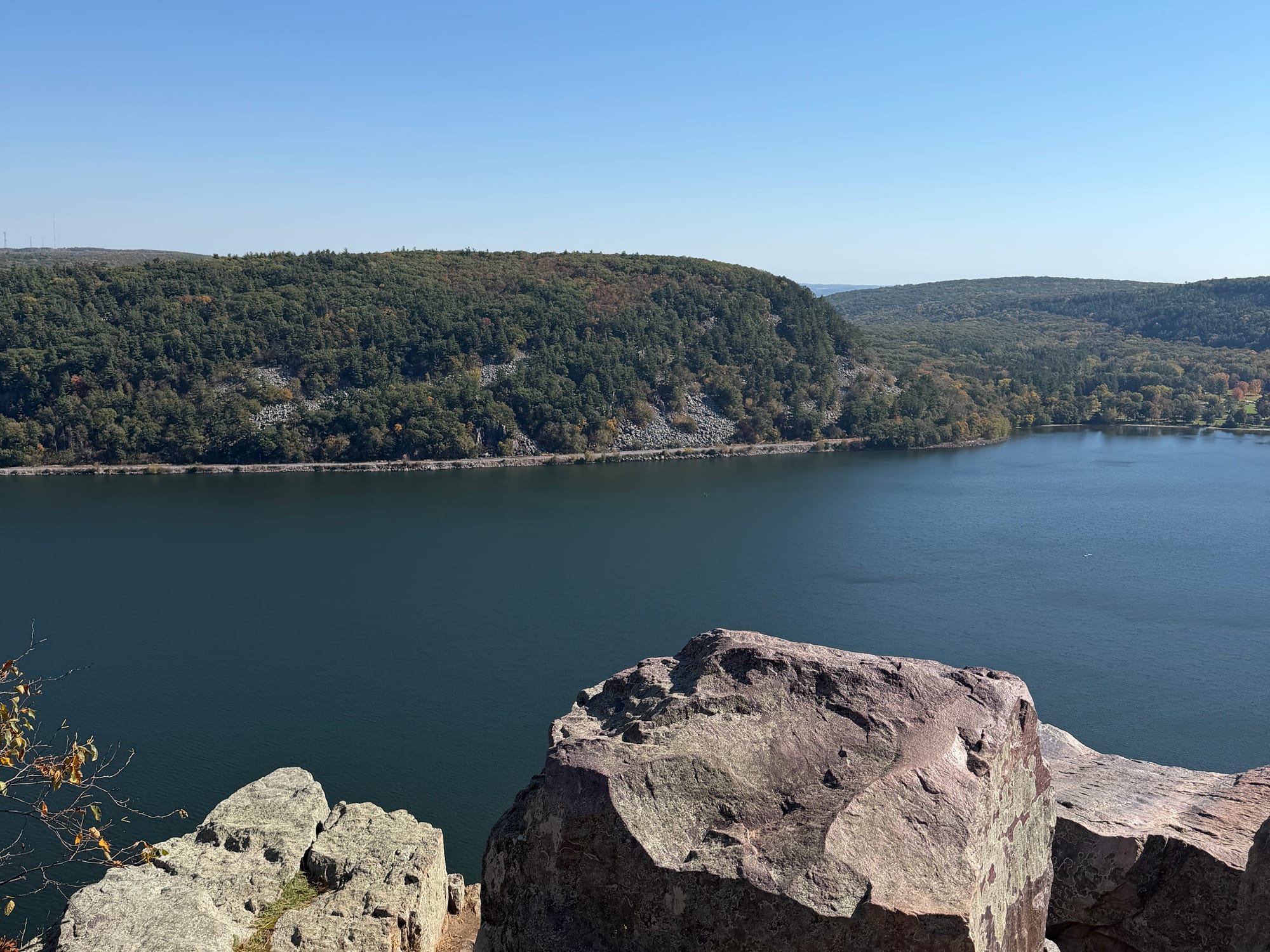
That's something I need to remind myself of more often, when I'm on a long bike ride, going for a run, or on an extended hike. This past weekend, at Devil's Lake, I experienced what I can only describe as "body euphoria" as I bounded up and down the steep ascents of the east and west bluffs. There was a moment when, boot treads hitting stone, it felt like my body was finally doing exactly what I knew it could. It took me a moment to understand the looks I was getting from other hikers; I was grinning ear-to-ear like a madman while huffing my way through six miles and 80 overall floors climbed.
Living with a chronic illness constantly puts you at odds with your personal experience compared to that of other people. It's easy to dissociate if you dwell on it for too long. But this is where personal acknowledgment becomes its own burden. It sucks running through my limitations as a guy who feels kind of shitty a few days a month. It's a different perspective to look at what I'm capable of doing as someone with multiple sclerosis.
That is to say: I didn't write this one for you to read, I wrote it for myself to write.
Maybe I do need that bathroom mirror Post-it.
Read
Hey, you're reading it right now. Why not subscribe so you can read it in the future?
Watch
- Cloud by Kiyoshi Kurosawa on the Criterion Channel
Kurosawa has an interesting approach to filmmaking. Often, he gets stuck on a sinister idea related to the social impact of a new technology and builds a thriller around it. In Pulse, Kurosawa gets hung up on the idea of the dissociated social connections of the early Internet. In Cloud, it's the terrors of eBay.
Listen
- "Temptation to Exist" by Andrew W.K.
Andrew W.K. got divorced, wrote a bleak and powerful divorce album, deleted his social media presence entirely, and also, in that window, married Kat Dennings. His latest album is an experimental jazz instrumental piece influenced by the sort of noir-ish jazz of Angelo Badalamenti's David Lynch scores. It's really good.
Consume
- Culver's Chocolate Concrete with Peanut Butter Sauce and Peanut Butter Cups
After my long hike, I was dying—I could immediately tell I was in a massive calorie deficit and needed to up my blood sugar quickly. I don't love recommending fast food chains (especially not ones that have lobbied for conservative causes), but it's hard to deny how truly delicious Culver's chocolate frozen custard is, especially when paired with multiple peanut butter additions. Save this for a "pull cord in case of emergency" situation.
Artwork by Ashley Elander Strandquist. You can view her illustration work here.